Fotona 4D Laser Facial (TimeWalker) for a Fresh, Camera-Ready Complexion
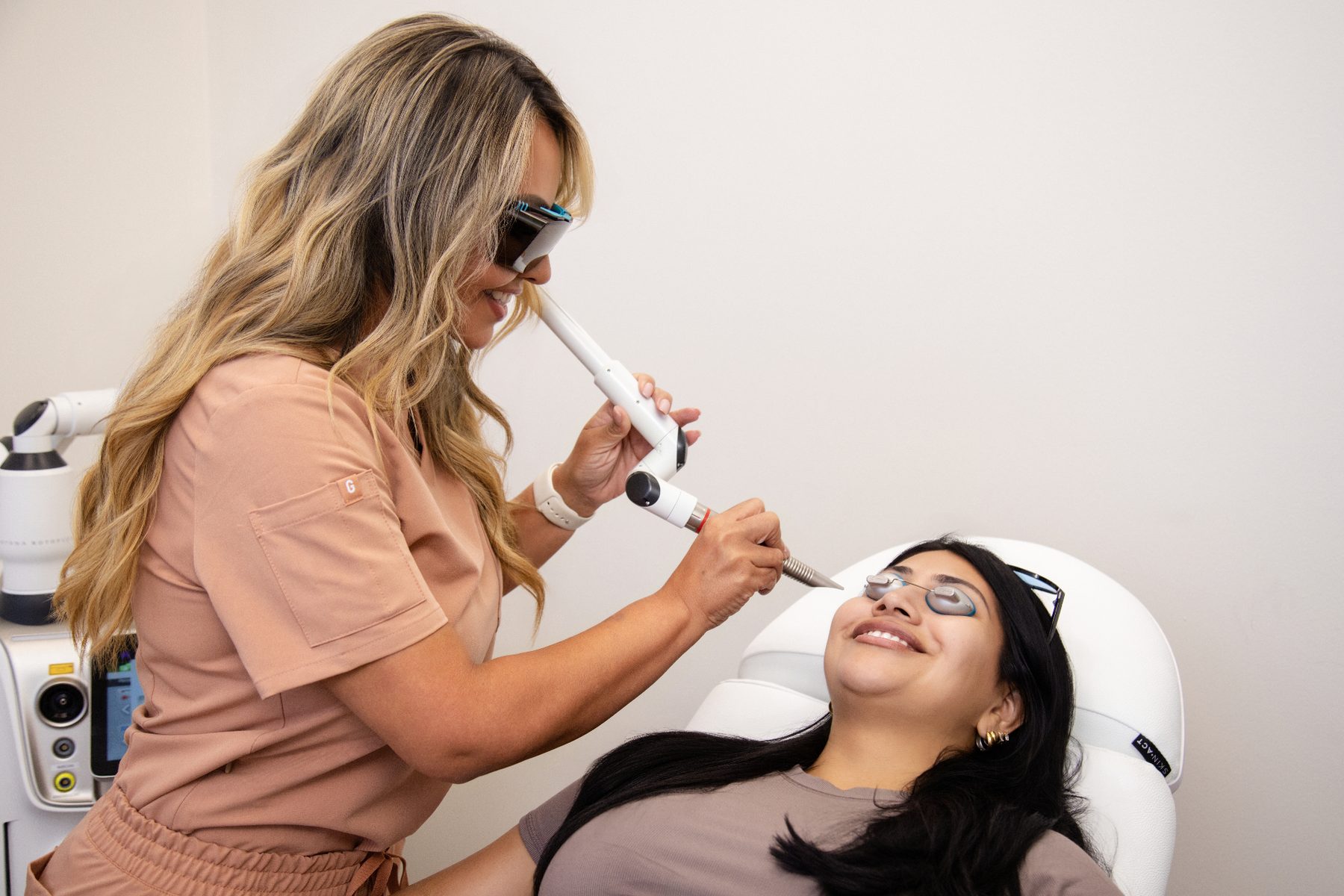
A lot of facial rejuvenation treatments promise glow, firmness, and smoother texture in the same breath. Very few can realistically address all three without needles, significant downtime, or the waxy look that patients often fear more than lines themselves. That is where the Fotona 4D Laser Facial (TimeWalker) tends to stand apart.
In practice, this treatment is less about a single pass of light over the skin and more about a carefully layered strategy. The appeal lies in how it works from multiple tissue depths, including inside the mouth in one of its signature steps, while also resurfacing and tightening externally. For the right patient, that can translate into a fresher complexion on camera, a softer lower face, and skin that catches light in a healthier way.
The phrase “camera-ready” matters here. Most people are not asking to look transformed. They want to look rested on video calls, polished in photos, and less washed out under overhead lighting. They want better tone, finer texture, and a bit more structure around the cheeks, mouth, and jaw. Those are subtle goals, but they are highly visible ones. Good laser work often succeeds precisely because it does not announce itself.
What the Fotona 4D approach actually is
Fotona 4D is a multi-step laser rejuvenation treatment performed on the TimeWalker platform. Rather than relying on one setting to do everything, it combines different modes and depths of energy delivery to target oral mucosa, deeper dermal tissue, mid-level imperfections, and the surface of the skin. In many clinics, the sequence includes the proprietary SmoothLiftin, FRAC3, PIANO, and SupErficial steps.
That combination is a big part of why the treatment gets attention. One phase supports collagen remodeling from inside the mouth, which is unusual and often surprising to first-time patients. Another targets deeper skin structures for tightening. Another helps with texture and irregularities. The final pass can polish the surface for brightness and refinement. When the settings are chosen well, the result is not just “tighter skin.” It is skin that looks more even, more reflective, and less fatigued.
The TimeWalker platform itself is worth noting because it reflects how the treatment is delivered. Fotona systems are known for pairing erbium:YAG and Nd:YAG wavelengths, each suited to different depths and tissue effects. That versatility matters more than marketing language does. In experienced hands, it gives a practitioner room to tailor the treatment based on whether the patient’s real issue is crepiness, laxity, enlarged pores, dullness, early jowling, or a tired mouth area.
Why it photographs so well
Some treatments look better in person than on camera. Others do the reverse. Laser rejuvenation tends to be particularly effective on camera because high-resolution photos and video exaggerate a short list of skin traits: uneven texture, diffuse redness, enlarged pores, shadowing around the mouth, and loss of reflected light from dehydrated or rough skin.
The Fotona 4D Laser Facial (TimeWalker) can improve several of those traits at once. Skin with smoother texture reflects light more evenly. Mild tightening around the lower face can soften shadows that create a tired look. Subtle collagen remodeling around the nasolabial area and cheeks may help the face read as firmer without changing expression. Surface polishing can also reduce the dull, slightly rough finish that makeup tends to cling to.
Patients often describe the result not as younger, but as cleaner, brighter, and more awake. That distinction matters. A truly camera-ready complexion usually does not come from making the face look different. It comes from reducing the visual noise.
The four dimensions, without the jargon overload
Most branded treatments become harder to understand the more they are explained. This one gets simpler once you strip the language down.
SmoothLiftin is the intraoral portion, delivered from inside the mouth. The intent is to heat tissue and stimulate collagen remodeling in the cheek and perioral area without breaking the external skin. This is the step patients tend to remember because it feels unusual, though not typically painful when done properly. For someone bothered by early sagging around the mouth or flattening in the mid-face, it can be one of the more interesting parts of the protocol.
FRAC3 is generally used to target deeper imperfections more selectively. Depending on settings and patient needs, this can help with textural irregularities and signs of photoaging. It is not the same as a fully ablative resurfacing session, and that distinction is important because downtime expectations differ.
PIANO is the deeper bulk-heating stage, commonly associated with skin tightening. This is where the treatment leans into warmth rather than abrasion. Patients often notice this phase as a sustained heat that builds gradually. When done well, it should feel deliberate and controlled, not sharp or punishing.
SupErficial is the finishing pass that addresses the outermost layer with a light peel effect or polishing effect, depending on intensity. This is often what contributes to the post-treatment glow people notice first.
Not every practitioner uses the exact same settings or intensity. That is not a flaw. It is how responsible customization works. A patient attending a wedding in six days may need a different approach than someone focused on long-term collagen stimulation and willing to accept a rougher recovery for a stronger result.
Who usually gets the best response
The ideal patient is not necessarily the one with the most severe aging. In fact, treatments like this often shine in the early to moderate range, when the goals are refinement, prevention, and strategic tightening rather than dramatic correction.
People who tend to do well often share a few characteristics:
- Mild to moderate skin laxity, especially around the cheeks, jawline, or mouth
- Dull texture, enlarged pores, or early creasing that makeup emphasizes
- A desire for visible improvement without injectables or surgery
- Realistic expectations about gradual collagen remodeling
- Willingness to follow sun protection and aftercare carefully
That said, there are edge cases worth discussing. Patients with significant sagging may like the brightness and textural benefits but should not expect a laser facial to replicate the lift of surgery. Patients with active melasma, recent isotretinoin use, impaired wound healing, certain infections, or a tendency toward post-inflammatory hyperpigmentation may require modified settings, pre-treatment skin prep, or a different treatment entirely. Darker skin tones can absolutely be candidates, but that calls for careful parameter selection and a practitioner who treats a broad range of skin safely and routinely.
Experience matters here more than branding. The same device can produce elegant, natural results or disappointing ones depending on skin assessment, pulse selection, thermal endpoints, and aftercare guidance.
What a session feels like
Patients usually come in expecting either a spa facial or a punishing laser treatment. It is neither. A Fotona 4D session tends to fall somewhere in the middle, more technical than relaxing, but generally very tolerable.
The intraoral step often feels warm and odd rather than painful. The deeper tightening pass creates sustained heat, sometimes the kind that makes a patient grip the chair for a moment before it passes. The surface pass can feel prickly or scratchy depending on settings. Some clinics use topical anesthetic for selected steps, while others rely on cooling, pacing, and communication. That choice can vary by protocol.
Immediately afterward, skin may look pink to red, feel warm, and seem slightly dry or tight. Some patients have mild swelling, especially around the cheeks and mouth. Others leave looking flushed but socially presentable. The stronger the superficial component, the more likely you are to experience a sandpapery feel for a few days.
I usually tell patients to think in phases rather than a single recovery timeline. Day one is heat and redness. Days two and three are often dryness and roughness. Around the one-week mark, many people notice the skin becoming clearer and more polished. Tightening and collagen-related improvements continue developing over the next several weeks to months.
How much downtime is realistic
This is where expectations need to be honest. “No downtime” is a phrase that should make any careful patient skeptical. There may be minimal downtime compared with more aggressive resurfacing, but minimal is not the same as none.
For a gentle treatment, some people are back to work the same day with a bit of redness. For a more assertive session, especially one designed to improve texture meaningfully, three to seven days of visible dryness, roughness, or mild bronzing is common. Makeup may go on unevenly for a short period. That matters if your goal is to look polished for an event.
If the treatment is being timed for photography, a gala, or on-camera work, I generally prefer a buffer of at least seven to ten days, sometimes two weeks for cautious planning. Skin often looks good before that, but “good enough” and “camera-ready under unforgiving lighting” are not the same thing.
The difference between instant glow and true remodeling
One reason patients get confused by laser facials is that two kinds of results often happen on different clocks. The first is the short-term optical improvement: smoother surface, cleaner tone, better light reflection. The second is biologic remodeling: new collagen formation, tightening, and improved elasticity over time.
You may see a freshening effect quickly, especially once the initial roughness settles. That is the part people notice in the mirror within days. The firmer, more structured look develops more slowly. Most collagen-based treatments ask for patience, and this one is no exception. Peak improvement often unfolds over several weeks, with additional gains after a series.
That distinction also explains why some patients love the treatment after one session while others are underwhelmed. A single treatment can be worthwhile, especially before a visible event. But for sustained tightening and texture work, a series is often more rewarding than a one-off appointment.
Where it sits compared with other treatments
Patients often ask whether Fotona 4D is better than microneedling, radiofrequency, IPL, or traditional resurfacing. The truth is that each treatment solves a different problem set.
Microneedling can be excellent for mild texture issues and collagen stimulation, particularly when patients want lower downtime. Radiofrequency-based treatments may be favored for heating and tightening, depending on device and anatomy. IPL is useful when redness and pigment are the main complaints. Ablative resurfacing remains stronger for deeper lines and more dramatic texture correction, though recovery is more demanding.
Fotona 4D sits in an interesting middle lane. It is often chosen by patients who want more than a glow facial, less than aggressive resurfacing, and a treatment that can address both surface quality and underlying firmness in one session. It is especially appealing for the lower face and mouth area, where a little tightening and refinement can change the whole impression of the face on camera.
A sensible treatment plan, not a fantasy one
The best outcomes usually come from planning rather than impulse booking. If someone walks in two days before a major event asking for a transformation, that is rarely the moment for a multi-layer laser treatment. If they come in six weeks ahead, the odds improve dramatically.
A practical timeline often looks like this:
- First treatment two to eight weeks before an important event, depending on intensity
- Reassessment after healing to judge whether a second session adds value
- Maintenance every few months or as advised, based on skin goals and response
- Strict sun protection before and after treatment
- Supportive skincare focused on barrier repair, hydration, and gentle actives
That timeline shifts with age, baseline skin quality, ethnicity, sun exposure history, and how aggressive the provider intends to be. Someone in their thirties seeking preventive maintenance may schedule very differently from someone in their OMNIA Wellness Center Fotona 4D Laser Facial (TimeWalker) fifties treating laxity and visible texture.
The often-overlooked role of skincare around the treatment
A laser can do a lot, but it performs better on skin that is not inflamed, over-exfoliated, or dehydrated. This is one of the most common reasons patients have a less impressive result than expected. They arrive with a compromised barrier, often from too many acids, retinoids, scrubs, or trendy home devices.
The best pre-treatment skin is boring skin. Calm, hydrated, and predictable. That usually means a straightforward cleanser, moisturizer, sunscreen, and only carefully chosen actives for a week or two beforehand if your provider advises it. After treatment, restraint matters even more. Patients who immediately jump back into strong retinoids and exfoliants often prolong redness and sensitivity, which undermines the polished look they wanted in the first place.
For camera-facing patients, I also pay attention to product finish in the recovery window. Heavy occlusives can be useful at night, but too much shine during the day can accentuate texture on video. The right moisturizer should support healing without turning the face into a reflective sheet under studio lights.
Cost, value, and the question patients really mean to ask
Prices vary widely by region, clinic expertise, treatment depth, and whether the session is part of a package. In many markets, this is not an inexpensive facial. Patients may see fees in the several-hundred to low-thousands-per-session range. That spread is large because not all “laser facials” are equivalent in duration, intensity, or physician involvement.
The better question is whether the treatment suits your actual problem. If your main issue is facial volume loss, no laser will replace that. If your issue is severe laxity, surgery may ultimately be more cost-effective than repeated moderate treatments that deliver subtle change. But if you need broad rejuvenation, improvement in texture and radiance, and a modest tightening effect without injectables or surgery, the value can be very reasonable.
One of the strongest uses for the Fotona 4D Laser Facial (TimeWalker) is exactly that middle territory, the patient who wants visible refinement without crossing into a more invasive category.
Safety, side effects, and where caution matters
Every energy-based treatment has trade-offs. With Fotona 4D, common temporary effects include redness, swelling, dryness, tenderness, and a rough or flaky surface for several days. Less commonly, patients may experience prolonged redness, acne flares, cold sore reactivation if prone, or pigment changes. Those risks rise when the wrong patient is treated, settings are too aggressive, or aftercare is ignored.
This is not a treatment to shop for solely by price. Ask who performs it, how many they do, what the expected downtime is for your skin and settings, and what they would choose instead if you are not a strong candidate. A trustworthy practitioner is often most impressive when they talk you out of the wrong plan.
Patch testing is not always standard for every patient, but for those with reactive skin, darker skin tones, or a history of pigment issues, a cautious approach can be very smart. Good medicine is often quiet and uneventful. That is the goal.
If your aim is a polished, rested face rather than a dramatic makeover
That may be the most useful way to frame this treatment. The Fotona 4D Laser Facial (TimeWalker) is usually at its best when the target is not a different face, but a more rested version of the same one. Better bounce through the cheeks. Less creasing around the mouth. Smoother texture so foundation sits better. A little less laxity along the jaw so the whole face reads cleaner in photographs.
Patients who love it most are often those who appreciate subtlety. They notice that they need less makeup. They stop angling their face quite so carefully on video calls. They look less drawn by the end of the day. Friends say they look well, not treated.
That is a meaningful outcome, especially now that so many people see their own faces constantly on screens. Good aesthetic work rarely relies on a single dramatic gesture. More often, it comes from measured improvements that add up. This treatment, when chosen for the right reasons and performed with judgment, can fit that philosophy very well.
OMNIA Wellness Center
Address: 16430 Ventura Blvd Ste 207, Encino, CA 91436
Phone: (818) 386-8511
FAQ About Fotona 4D Laser Facial (TimeWalker)
What are the benefits of Fotona laser treatment?
OMNIA offers this treatment for concerns such as uneven texture, dull tone, and fine lines. Results and the number of sessions vary, so discuss your goals with a provider.
Is Fotona laser safe?
A qualified provider should review your skin, medical history, medications, and recent sun exposure to determine whether the treatment is appropriate. Ask about possible irritation, pigment changes, and aftercare before booking.
How much does a Fotona 4D facelift cost?
Price depends on the treatment plan and number of visits. Ask OMNIA for an itemized estimate during your consultation.